我与李光耀国父的对话(人工智能)
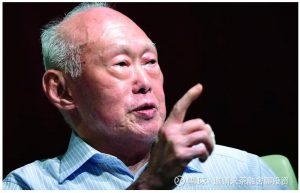
与李光耀对话:AI时代如何生存?他直言——你不是在和AI竞争,而是在和会用AI的人竞争。每天使用它,培养机器无法取代的判断力与责任感。问自己:如果明天我消失了,雇主要多久才能找到替代?学习是唯一可靠的资产。不问会否被淘汰,只问今天做了什么,让明天比今天更有价值。
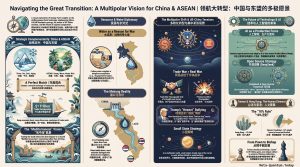
China's Dual Circulation strategy is reshaping the global economic order — deliberately, not defensively. With 400 million middle-class consumers, rapidly advancing indigenous technology, and record exports redirected to fast-growing Global South markets, China is systematically dismantling Western economic leverage. What was once a fatal vulnerability is now a manageable inconvenience. The optionality revolution isn't coming — it's already here.
Southeast Asia emerges as a critical battleground in Sequoia's $10 trillion AI revolution, with over $30 billion committed to regional AI infrastructure in 2024 alone. The region's 675 million digitally-native population could capture nearly $1 trillion in AI-driven GDP growth by 2030—representing 13-18% economic expansion. While global tech giants establish Asian AI headquarters across Singapore, Thailand, and Malaysia, Southeast Asia faces a paradox: massive infrastructure investment alongside a local funding winter. The region is positioned as an AI consumption hub and testing ground rather than an innovation leader.
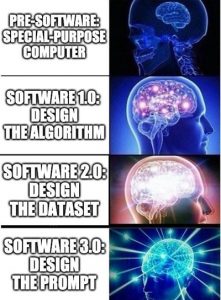
Software 3.0 represents a revolutionary programming paradigm where developers use natural language prompts instead of traditional code, as popularized by Andrej Karpathy in 2025. Southeast Asia is emerging as a major AI hub, with potential to add $1 trillion to regional GDP by 2030. The region attracts record investments exceeding $30 billion in AI infrastructure, while facing challenges including talent shortages and employment displacement concerns.
China's digital yuan strategy represents a comprehensive challenge to US financial hegemony, leveraging advanced fintech platforms like WeChat and cross-border payment systems like mBridge to create alternative monetary infrastructure. Through Belt and Road Initiative integration and partnerships with countries seeking dollar alternatives, China is systematically building parallel financial networks that could undermine SWIFT and dollar dominance. This technological-geopolitical fusion threatens to fragment global payments, reshape international monetary systems, and establish a multipolar digital financial order centered on Chinese-controlled platforms and yuan-denominated transactions.
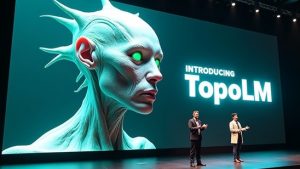
The Topographic Language Model represents a paradigm shift in AI language processing, organizing neural units on a spatial grid to mimic the brain's cortical structure. By implementing a simple "spatial smoothness loss" alongside traditional language objectives, Topo LM develops distinct regions for processing verbs, nouns, and other linguistic features—just like human fMRI scans reveal. This brain-inspired approach not only maintains competitive performance but offers unprecedented interpretability, with potential applications spanning from Southeast Asian language processing to healthcare and neuromorphic computing.
人工智能对东南亚未来五年的影响摘要 未来五年,阿里巴巴Quark和Text2Robot等AI技术将在东南亚市场迎来重大发展机遇。Quark可通过阿里巴巴现有电商渠道实现区域扩张,但需克服语言多样性挑战。Text2Robot技术将助力东南亚制造业转型,特别是在泰国、越南等国。区域发展将分阶段进行:2025-2026年初步试点,2027-2028年城市普及率达30-40%,2029-2030年扩展至农村地区。数字基础设施不均、人才短缺和监管框架不完善是主要障碍,但年轻人口结构和政府政策支持将成为推动因素。
Google Cloud Next '25 unveiled a suite of transformative technologies spanning infrastructure, AI, and productivity. Highlights include the 7th-gen Ironwood...
Genspark's Super Agent offers game-changing capabilities to the world, especially for Southeast Asian SMEs. This AI-powered system combines nine language models with 80+ specialized tools to handle complex tasks autonomously. From making customer service calls in multiple regional languages to creating localized marketing content and streamlining operations, Super Agent helps resource-constrained businesses compete effectively
# 机器人训练数据获取与东南亚发展机遇 机器人训练数据主要通过远程操作、手部动作跟踪、仿真环境和模仿学习等方式获取。彼得·阿比尔提出的数据金字塔和Body Transformer架构可显著提高学习效率。 东南亚可通过劳动密集型产业自动化、发展适合当地环境的机器人解决方案、建立区域数据中心等方式受益。采用模块化硬件设计和开源仿真工具可降低成本,同时在旅游服务、海洋资源管理和传统工艺数字化等领域建立特色应用。