

📌 Introduction
For four decades, China’s economic engine ran on a straightforward formula: manufacture goods cheaply and export them to Western markets, primarily the United States and Europe. That model is now being deliberately dismantled — not because it failed, but because China found a more resilient alternative. This video introduces viewers to Dual Circulation, a sweeping economic strategy that most Westerners have never heard of, yet one that may be the most consequential geopolitical shift since Deng Xiaoping opened China to foreign investment in 1978.
Contrary to mainstream narratives that frame this pivot as a defensive reaction to Trump-era tariffs or Western decoupling pressure, the video argues compellingly that Dual Circulation began forming as early as 2015 — long before any trade war. Its goal: make Western consumer markets optional, not essential. Video about Dual Circulation Strategy.
What is Dual Circulation
Dual Circulation is an economic strategy formally unveiled by the Chinese government in 2020. It was introduced to redefine the country’s growth model in response to a more volatile and complex global environment.
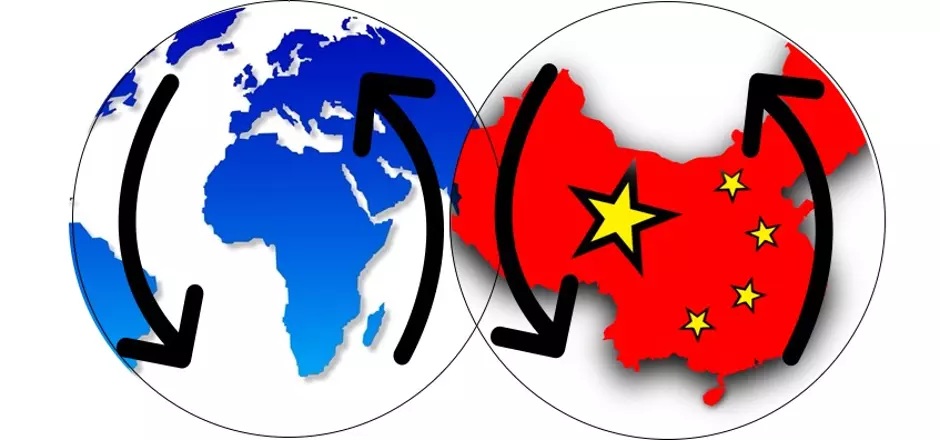
In simple terms, it is a strategy that prioritizes strengthening the domestic economy (“internal circulation”) while still maintaining and leveraging international trade and investment (“external circulation”).
Here is a detailed breakdown of the concept:
The Core Concept: “Circulation”
The word “circulation” refers to the entire lifecycle of an economy: R&D, production, distribution, and consumption. For an economy to be healthy, this cycle must flow smoothly.
- If circulation is blocked: Goods are produced but not sold, income stops, and investment halts.
- If circulation is smooth: Demand creates production, which creates jobs, which creates income, which creates more demand.
The Two Loops Explained
1. Internal Circulation (Domestic Focus) This is now the “main body” of the strategy. The goal is to make China’s economy less dependent on foreign markets. This involves:
- Boosting Domestic Consumption: Encouraging Chinese citizens to spend more money on goods and services. This requires strengthening the middle class and improving the social safety net so people feel confident spending rather than saving.
- Self-Sufficiency and Innovation: Reducing reliance on foreign technology (especially after US sanctions on companies like Huawei). This means investing heavily in R&D to create “indigenous innovation” in critical sectors like semiconductors, AI, and green energy.
- Upgrading Supply Chains: Moving Chinese manufacturing up the value chain, from making cheap consumer goods to producing high-tech, high-value products.
2. External Circulation (International Focus) While domestic strength is the priority, China does not intend to close its borders. The “external circulation” aims to:
- Maintain High-Level Openness: Continuing to attract foreign investment and participate in global trade.
- Integrate with Global Standards: Aligning with international economic and trade rules to make it easier for Chinese companies to operate abroad.
- Create New Advantages: Moving from simply being the “world’s factory” to being a hub for high-end manufacturing, finance, and innovation that connects with global markets.
Why Was It Introduced? (The Context)
The strategy was a direct response to several major shifts:
- Pandemic Disruptions: COVID-19 exposed the fragility of global supply chains. If a factory in another country shuts down, it can halt production in China, and vice versa.
- Geopolitical Tensions: Rising trade tensions and tech wars with the US made it clear that China could no longer rely on the West for critical technologies or stable market access.
- Maturing Domestic Economy: China’s “dual circulation” phase follows its previous “export-led growth” phase. As the domestic market becomes wealthier, it makes economic sense to focus more on serving the 1.4 billion people at home.
The “Dual” Relationship
It’s crucial to understand that these are not two separate economies. The idea is that a stronger internal circulation (a confident, consuming China with advanced technology) makes China a more valuable partner in the external circulation. A stronger domestic base gives China more leverage and stability in the global market.
Dual Circulation is China’s strategy to build economic resilience by strengthening its massive domestic market (Internal) as the primary engine of growth, while simultaneously upgrading its role in the global economy (External) to ensure it remains open and competitive.
Video about The Dual Circulation Strategy
🔁 Force 1: The Domestic Consumption Engine
The first pillar of Dual Circulation is building internal demand powerful enough to sustain growth without relying on foreign buyers.
The numbers tell a striking story. In 2006, exports accounted for 36% of China’s GDP. By 2024, that figure had dropped to 19.7% — nearly halved. Meanwhile, domestic consumption surged from 35% of GDP in 2010 to 54.3% in 2024.
China now has 400 million middle-class citizens by World Bank standards — more than the entire U.S. population — projected to reach 550 million by 2030. And they’re buying Chinese. Key market-share data makes this vivid:
- Smartphones: Huawei, Xiaomi, OPPO, and Vivo control 78% of the domestic market; Apple has fallen to just 15.7%.
- Electric Vehicles: BYD outsells Tesla in China 3.2 to 1; Chinese brands hold 83% of the domestic EV market.
- Cosmetics: Chinese beauty brands grew from 12% market share in 2015 to 47% in 2024.
The strategic implication is clear: every percentage point of domestic consumption growth reduces the sting of Western tariffs.
🏭 Force 2: The Indigenous Capability Buildout
The second pillar targets China’s historical Achilles’ heel — technological dependency. For decades, China assembled products using processors from California, memory chips from South Korea, and display panels from Japan. That vulnerability was exposed when the Trump administration blacklisted Huawei from accessing American semiconductors in 2019.
Rather than collapsing, China launched the most aggressive industrial self-sufficiency drive in modern history. Between 2019 and 2024, China spent $143 billion on semiconductor development — more than the combined investments of the U.S., EU, Japan, and South Korea during the same period.
Results are already materializing faster than expected:
- Semiconductor self-sufficiency rose from 16% in 2019 to 31% by 2024, with projections of 47% by 2027.
- SMIC, China’s leading chipmaker, achieved 7-nanometer chip production using entirely domestic equipment.
- The COMAC C919 passenger jet entered commercial service in 2023, with 1,200 units ordered by Chinese airlines.
- Chinese companies now produce 73% of medical devices sold domestically (up from 34% in 2015).
- Chinese manufacturers installed 52% of domestic industrial robots in 2024 (up from 27% in 2018).
Perhaps most tellingly, in the EV battery sector — once dominated by Japan and South Korea (87% market share in 2015) — CATL and BYD now control 54% of global EV battery production. China didn’t just catch up; it leapfrogged. The same acceleration is underway in solar panels, wind turbines, high-speed rail equipment, and telecom infrastructure.
As one Shenzhen supply chain analyst summarized: “5 years ago, my clients panicked about American component restrictions. Today, they have domestic alternatives for almost everything. Not always as good, but good enough — and getting better fast.”
🌍 Force 3: The Global South Pivot
The third and perhaps most strategically consequential force is China’s redirection of exports away from Western markets toward faster-growing economies in the Global South.
Crucially, Chinese exports are not declining — they reached an all-time high of $3.59 trillion in 2024. What’s changed is the destination. The U.S. and EU’s combined share of Chinese exports fell from 38% in 2010 to 27% in 2024. The redirected trade went to:
- ASEAN: $138B → $523B (279% growth)
- Africa: $67B → $187B (179% growth)
- Middle East: $74B → $213B (188% growth)
- Latin America: $91B → $247B (171% growth)
Belt and Road Initiative countries now absorb 46% of all Chinese exports. The BRI’s $1.34 trillion in infrastructure investments across 149 countries function as market creation engines — railways, ports, and power plants built with Chinese loans, equipment, and engineering that permanently integrate recipient economies into Chinese supply chains.
The video highlights that these aren’t charity markets but high-growth markets: ASEAN’s GDP grows at 4.7% annually, Africa’s population is projected to hit 2.5 billion by 2050, and Middle Eastern sovereign wealth funds hold $4.1 trillion actively seeking non-Western partners. By 2035, Belt and Road countries are projected to represent $67 trillion in combined GDP — larger than the current combined GDP of the U.S. and EU.
The headline metric that captures the shift: Chinese EV exports to Southeast Asia, the Middle East, and Latin America combined (2.3 million units) already dwarf exports to Europe (847,000 units).
⚖️ The Optionality Revolution: Western Leverage Evaporating
The video synthesizes all three forces under the concept of the “Optionality Revolution” — China is acquiring choices, and choices erode leverage.
Western economic strategy over China rested on three assumptions: that China needs Western consumers, that it depends on Western technology, and that it lacks alternative trading partners at scale. Dual Circulation systematically dismantles all three. A former U.S. Treasury official quoted in the video acknowledged the shift starkly: “Our playbook assumed dependencies that are eroding. Sanctions and tariffs that would have been devastating in 2010 are now manageable inconveniences. We’re running out of economic weapons.”
The video outlines three scenarios for how this unfolds over the next decade:
- Negotiated Coexistence (30% probability) — Western nations accept diminished leverage, seek pragmatic accommodation.
- Accelerated Fragmentation (50% probability) — Two parallel economic blocs emerge, one Western-led, one China-led, with deepening separation.
- Economic Conflict (20% probability) — Active economic warfare, dramatic financial sanctions, catastrophic global growth collapse.
The current trajectory points firmly toward Scenario 2.
✅ Conclusion & Key Takeaways
Dual Circulation is not a theoretical blueprint — it is an operational strategy delivering measurable results right now. China’s domestic consumption is rising, indigenous capabilities are expanding, and export destinations are diversifying. The window for Western leverage is closing rapidly, not gradually.
Key Takeaways:
- Dual Circulation began in 2015 as a deliberate long-term strategy, not a reaction to Western pressure.
- China’s middle class (400M today, 550M by 2030) is reducing dependence on Western consumers.
- Semiconductor self-sufficiency doubled in five years despite Western sanctions — innovation bypassed restriction.
- Chinese exports hit record highs in 2024, but nearly half now flow to Belt and Road nations beyond Western influence.
- The Global South is not an alternative market of last resort — it’s a faster-growing market of first choice.
- Western policymakers are operating on outdated leverage assumptions. The “economic weapons” that were devastating in 2010 are increasingly blunt instruments today.
📚 Related References
- Dual Circulation Policy Overview — IMF Working Papers & World Bank Reports on China’s economic rebalancing
- CATL & BYD Global Battery Market — BloombergNEF Battery Market Outlook
- Belt and Road Initiative Tracker — AEI China Global Investment Tracker: https://www.aei.org/china-global-investment-tracker/
- SMIC Semiconductor Progress — Reuters & South China Morning Post technology coverage
- China Middle Class Growth — McKinsey Global Institute, “China’s next chapter” reports
- ASEAN-China Trade Statistics — ASEAN Secretariat Trade Data Portal
