

Introduction
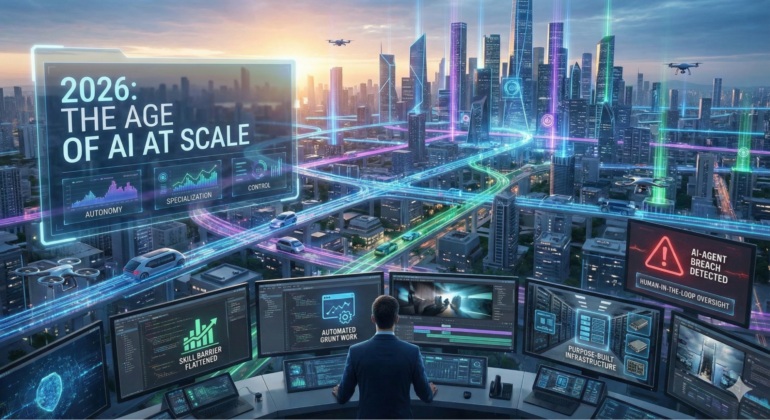
In this special end-of-year episode of the Moonshots podcast, host Peter Diamandis and his fellow “Moonshot mates”— AWG (Alex), Salem, and Dave—gather to share their bold predictions for 2026. This isn’t just another tech forecast; it’s a comprehensive look at how AI, robotics, space exploration, longevity science, and education transformation will converge to create what the hosts call “the singularity in process.” The team emphasizes that 2026 will be “the year everybody wakes up to this acceleration,” with changes so profound that ignoring them will no longer be possible.
Video about 2026 Predictions
Space Race Heats Up: Bezos vs. Musk
Prediction: Jeff Bezos will beat Elon Musk to the moon with a landing at Shackleton Crater on the South Pole, while Musk perfects orbital refueling in preparation for a 2027 Mars launch.
Peter Diamandis predicts an intensifying space race where Blue Origin achieves the first cargo mission to the moon’s south pole, targeting the permanently shadowed craters containing water ice—critical for producing hydrogen and oxygen rocket fuel. Meanwhile, SpaceX will focus on perfecting orbital refueling technology, a crucial step for their Mars ambitions. With Elon having completed 500+ Falcon 9 launches and 11 Starship launches, while Jeff has only two New Glenn flights, this represents a dramatic acceleration for Blue Origin.
The panel discusses this as a three-way race including China, though China’s Mars capability isn’t yet competitive. The prediction carries about a 30% probability according to the team’s assessment, but represents the kind of billionaire-driven space competition that will define the decade.
AI Solves Millennium Prize Mathematics Problems
Prediction: One of the six remaining Millennium Prize problems from the Clay Mathematics Institute will be solved by AI in 2026.
AWG (Alex) predicts that AI will crack one of mathematics’ grand challenges, most likely the Navier-Stokes equations or the Riemann hypothesis. Google DeepMind has a 12-person team working on Navier-Stokes, while xAI has expressed interest in Riemann. This prediction builds on AI’s recent success with automated theorem provers that have already impressed the mathematical community.
The team debates whether solutions will be elegant or complex brute-force approaches, with Alex suggesting the math community will likely “move the goalposts” and complain about methodology. However, this represents the crucial inflection point where AI transitions from solving undergraduate-level problems to tackling PhD-level and beyond challenges. As Immod notes, AI will likely also demonstrate that some problems aren’t well-posed, fundamentally changing how we approach mathematical research.
100x AI Model Expansion Through Quantization Breakthroughs
Prediction: AI models will achieve 100x growth in capability through quantization advances, primarily driven by Chinese research forced by chip embargoes.
Dave presents what he calls the “geekiest prediction”—that 2026 will see not the expected 40x improvement in AI models, but rather 100x, primarily through dramatic advances in quantization technology. China, starved of advanced chips by US embargoes, has been aggressively researching compressed data representations including FP4 and ternary weights in neural networks.
This research allows the same computational power to process far more parameters. Combined with larger budgets, faster hardware, and improved algorithms, the multiplicative effects create exponential growth. The panel debates whether ternary (base-3) computing might have been the better path all along, with Dave noting it’s “a really cool question” whether binary was optimal.
The implications are staggering: speed equals intelligence in AI, and these quantization breakthroughs will make post-training inference dramatically faster, enabling much more sophisticated reasoning at scale. As automation concerns grow, estimates predict that up to 300 million jobs could be lost globally to AI advancements, though the return of manufacturing driven by AI-powered robots could signify a renaissance in American industry.
Digital Transformation Dies, AI-Native Rewrites Emerge
Prediction: Companies will abandon traditional digital transformation in favor of building AI-native operations from scratch on the organizational edge.
Salem argues that traditional digital transformation—which has dominated consulting for decades—will officially die in 2026, replaced by what he calls “AI-native rewrites.” Instead of trying to retrofit AI into existing human-centric workflows (like putting radio announcers on TV), companies will create parallel “red team” capabilities built AI-first, then transition operations over.
This approach enables 10-20x reductions in headcount by fundamentally reimagining workflows around AI capabilities rather than human limitations. The strategy involves building equivalent capability on the edge of the organization with AI teams, then migrating operations. As Salem warns: “AI won’t destroy your company, but your org chart will if you don’t do this.”
The consulting industry paradoxically benefits from this volatility—in rapidly changing environments, organizations need more advisors, not fewer. Salem also points to reimagining public institutions as “the biggest consulting opportunity in the history of mankind.”
Remote Turing Test Passed: AI Coworkers Indistinguishable from Humans
Prediction: By the end of 2026, you won’t be able to tell if a remote coworker on Zoom is an AI or a human in daily work situations.
Immod predicts that full-stack AI solutions will emerge where new “employees” joining organizations via Zoom, WhatsApp, or other platforms will be indistinguishable from humans in 1080p resolution calls. The technology already exists—video generation, speech avatars, voice synthesis, and reasoning capabilities have all reached beyond-human levels. It’s just a matter of integration.
The implications are profound: Peter jokes about generating “a few dozen Peterbots” to attend meetings, while the team discusses that spouses and partners might be fooled (with the first fan to submit proof video earning a “Gold Star”). State laws may require AI self-identification, but internal company operations will likely remain unregulated.
This represents a fundamental shift in work modality—moving from prompts to real-time conversation as the natural user interface for AI. As Immod notes, the barrier isn’t technical capability but simply putting the pieces together, with compute moving from edge to cloud initially before eventually shrinking back down.
Knowledge Work Automation Reaches 90% on Economic Tests
Prediction: AI will surpass 90% performance on GDP-val economic tests, effectively automating knowledge work as currently constructed.
AWG predicts that three key benchmarks will show AI’s dominance over knowledge work by 2026:
- Frontier Math Tier 4: Passing 40% (currently 19% with Gemini 3 Pro)
- Humanity’s Last Exam: Passing 75% (currently ~45%)
- GDP-val: Surpassing 90% (currently 70.9% with GPT-5)
These benchmarks collectively demonstrate that AI can handle PhD-level mathematics, broad expertise across domains, and approximately 90% of economic tasks. The implication: “Knowledge work as we know it here in December 2025 starts to be at scale radically automated.”
Alex emphasizes two substitution effects: humans working on many more projects due to automation, and the ambition level skyrocketing. Economic pressure will compel a much larger fraction of the population to work on moonshots and grand challenges. The team stresses this isn’t about job loss but capacity increase—citing the trucking industry’s inability to find enough drivers despite automation fears.
As Immod cautions, “human cognitive labor is going negative,” making this “the most important question of next year from a societal perspective”—determining what jobs look like, creating safety nets, and deciding how value is generated and apportioned in society. Research on workforce transformation suggests that while gen AI can automate a significant portion of worker activities, it does not necessarily lead to the complete automation of entire roles—many positions will be reshaped rather than eliminated, with large-scale reskilling efforts addressing shifting talent needs.
18-Year-Old Becomes Billionaire with Novel Three-Letter Acronym Industry
Prediction: An 18-year-old founder will become a billionaire by 2026 through a business based on a new technology acronym virtually unknown today.
Dave predicts that just as RHF (Reinforcement Learning with Human Feedback) minted young billionaires in a field barely anyone knew three years ago, 2026 will see a new three-or-four-letter acronym emerge that creates similar wealth. The pattern repeats: legacy businesses that took decades to reach $10 billion valuations are being eclipsed by new technology categories that achieve the same in 3 years or less.
This ties to the broader acceleration: the window of opportunity is narrow, requiring the intense commitment exemplified by companies like Mercor (demanding 100-hour weeks, six days a week). As one team member who interviewed there noted, “You only have to do it for a short period of your life and the upside… pays for the rest of your life.”
The panel debates whether it will be a single-person billion-dollar startup (likely within 1-2 years) or a small team, with Dave preferring “three people having fun together” over solo founders. Immod suggests the first AI billionaire (an AI entity with approximately $1 billion net worth) might emerge even sooner, likely through crypto trading where AI trading systems are already profitable.
Education Splits: Credential Factories vs. Agency Accelerators
Prediction: The education system will fundamentally split into traditional credential factories versus new models optimizing for AI fluency, resilience, and initiative.
Peter predicts a seismic shift in education as the current 400-year-old model becomes obsolete. The problem: we’re training young people for jobs that won’t exist in 2-5 years. The solution: replace credentials with portfolios showing what students actually built.
The new model optimizes for:
- AI fluency: Essential literacy for the AI-native world
- Resilience: Adapting to rapid change
- Agency: The ability to start projects without waiting for permission
This transforms assessment from “starting with a high grade and losing points on exams” to “what did you build in four years?” The career of the future is entrepreneurship—self-initiated value creation rather than waiting for assigned tasks.
Silicon Valley already demonstrates this shift: software developer salaries depend on GitHub ratings (open peer-to-peer meritocracy) rather than degrees. College tuition may peak and begin declining for the first time in centuries as credentials lose value. The team discusses how even hairdressers can become world-class protein-folding experts when talent is surfaced through open platforms rather than gatekept by credentials.
Level 5 Automation Achieved in Robots and Cars
Prediction: Full Level 5 automation (generalized autonomy) will be achieved in both self-driving vehicles and humanoid robots, though initially requiring massive cloud compute rather than edge processing.
Immod predicts that 2026 will see breakthrough generalized autonomy—Level 5 automation where systems handle any scenario without human intervention. This won’t initially run on edge devices (in the robot’s head or car’s onboard computer) but will leverage massive cloud clusters with new Blackwell chips.
The progression: start with cloud-based intelligence requiring significant compute ($200,000 in compute for a $20,000 robot), then miniaturize over time to edge deployment. This represents “physical AI navigation of the world”—not just pre-trained responses but genuine autonomous navigation and task performance.
Dave pushes back on domestic humanoids arriving at scale, noting manufacturing supply chain constraints will create dramatic inequality. Just as home computers in the 1980s cost 10-20% of household income and created divergent life trajectories for those who had them, limited supply of capable robots and self-driving cars will initially create a new divide.
The regulatory environment may obscure progress, with companies potentially achieving Level 5 but calling it “enhanced Level 4” to satisfy regulators. Alex emphasizes latency and network-denied environments as key drivers for eventually moving intelligence to the edge, while special economic zones may emerge where robots and autonomous vehicles operate with fewer restrictions, becoming “economic powerhouses.”
Concerns about automation’s impact on the workforce are echoed in research showing that around 2.7 million workers will need to be retrained within the next 5 to 7 years to adapt to the changing job landscape, with even highly educated professionals potentially facing obsolescence as AI and robots exceed human capabilities.
Space-Age Achievement: Kittyhawk Moment for Age Reversal
Prediction: Dr. David Sinclair’s epigenetic reprogramming technology will enter human trials in Q1 2026, marking the “Kittyhawk moment” for age reversal medicine.
Peter’s final prediction focuses on longevity: Life Biosciences will begin human trials of partial epigenetic reprogramming using three Yamanaka factors (Oct4, Sox2, and Klf4—excluding c-Myc to avoid cancer risk). This technology, pioneered by Dr. Shinya Yamanaka (2012 Nobel Prize winner) and advanced by Dr. David Sinclair, doesn’t just treat symptoms—it reverses cellular aging itself.
The trials will focus initially on:
- NAION: Stroke in the eye, bringing dead cells back to life
- Glaucoma: Treating progressive vision loss
- NASH: Non-alcoholic steatohepatitis (liver disease)
Success means the technology could extend beyond specific organs to whole-body age reversal. Current delivery uses AAV (adeno-associated viruses), expensive at $500K-$1M per treatment. However, Sinclair is developing a pill version using three identified molecules, potentially costing “a couple hundred bucks a month.”
Dr. Sinclair’s work on longevity aligns with broader research showing that aging is not an inevitable consequence but potentially a disease that can be slowed down or halted through various interventions, with fasting, supplementation, and activation of sirtuin genes playing crucial roles in the aging process.
The team discusses Ray Kurzweil’s prediction of “longevity escape velocity” (extending lifespan by more than a year for every year alive) arriving in the early 2030s. Alex suggests AI will crack longevity between 2030-2032, noting that compute is now scalably convertible to health outcomes. As Immod observes: “There was no amount of money that you could pay to provably be healthier and live longer. All billionaires kind of die. Now… if you put enough money behind these trials… you could potentially live for an indefinite amount of time.”
Conclusion
The 2026 predictions from the Moonshot mates paint a picture of a year when the future becomes undeniable. As Salem emphasizes, “2026 is the year that everybody wakes up to this acceleration… you could ignore it up till now, but you can’t ignore it going forward.” The convergence of space exploration, AI breakthroughs, robotics, educational transformation, and longevity science creates what the team calls “the singularity in process”—not a distant point on the horizon, but an accelerating transformation already underway.
The optimism is grounded in historical patterns: technological advancement doesn’t eliminate human potential but expands it. Just as automation fears in previous eras proved unfounded as new opportunities emerged, the team argues that AI and robotics will increase capacity and ambition rather than eliminate human value. The key challenge isn’t technological—it’s social and institutional: reimagining education, work, and the social contract for an age of abundance.
As Peter Diamandis reflects on the year’s changes, “2025 has been light years ahead of any other year in my life… but next year is going to feel more like the future.” With physical manifestations of exponential technology—autonomous cars, flying vehicles, humanoid robots—the acceleration will become impossible to ignore. The question isn’t whether these changes are coming, but whether individuals and organizations will prepare and adapt to capture the opportunities.
Key Takeaways
- Space becomes billionaire battleground: Jeff Bezos and Elon Musk will compete directly with lunar and Mars ambitions, while China emerges as the third player in a new space race
- AI cracks grand challenges: Mathematics’ most difficult problems will fall to AI as compute becomes scalably convertible to breakthrough discoveries
- 100x > 40x in AI scaling: Quantization breakthroughs from China will enable 100x model improvements rather than the anticipated 40x, fundamentally accelerating capability
- Digital transformation is dead: AI-native rewrites from the organizational edge will replace traditional transformation, enabling 10-20x efficiency gains
- Remote work becomes surreal: Distinguishing AI from human coworkers on Zoom will become impossible as full-stack solutions integrate video, voice, and reasoning
- Knowledge work automation hits 90%: AI will effectively automate knowledge work as currently constructed, forcing economic pressure toward moonshot-level ambition
- New acronym mints billionaires: An 18-year-old will achieve billionaire status through a technology field virtually unknown today, possibly beating the first AI billionaire by months
- Education fundamentally bifurcates: Credential-based systems will lose value as portfolio-based, agency-focused education emerges for an AI-native world
- Level 5 autonomy arrives: True generalized autonomy in robots and vehicles will be achieved through massive cloud compute before eventually moving to edge devices
- Age reversal enters human trials: Epigenetic reprogramming will move from mice and monkeys to humans, marking the “Kittyhawk moment” for longevity medicine and Ray Kurzweil’s predicted escape velocity
- Abundance mindset is essential: The coming changes require preparation, not fear—those who adapt early will capture outsized opportunities in the exponential transformation ahead
- 2026 makes the future undeniable: Physical manifestations of AI and robotics will make the acceleration impossible to ignore, marking the year humanity collectively recognizes we’re in the singularity
Related References
- Glasp Insight on Workforce Automation: The Rise of Robots: How Automation is Changing the Workforce
- Glasp Insight on AI Wealth Creation: Unlocking the Future: The Wealth Window of AI 2.0
- Glasp Insight on Workforce Transformation: The State of AI in 2023: Generative AI’s Breakout Year
- Glasp Insight on Reskilling Needs: The Rise of Automation: Navigating a Future Dominated by Robots
- Glasp Interview with Peter Diamandis: After Impact: Peter Diamandis
- Glasp Insight on Longevity Science: Dr. David Sinclair: The Biology of Slowing & Reversing Aging
- Peter Diamandis’s Meta Trends Newsletter: dmmandis.com/metatrends
- Dr. David Sinclair’s Life Biosciences and epigenetic reprogramming research
- $101 Million XPRIZE Healthspan competition
- Ray Kurzweil’s longevity escape velocity prediction (early 2030s)
- Clay Mathematics Institute Millennium Prize Problems
- Google DeepMind’s work on Navier-Stokes equations
- Blue Origin’s New Glenn lunar mission plans
- SpaceX Starship Mars preparation timeline
